Subject: Re: FW: 26/00147/1ENF & 26/00508/EC – Hawthorn Close – request for clarification following review
Dear [Planning Compliance Officer],
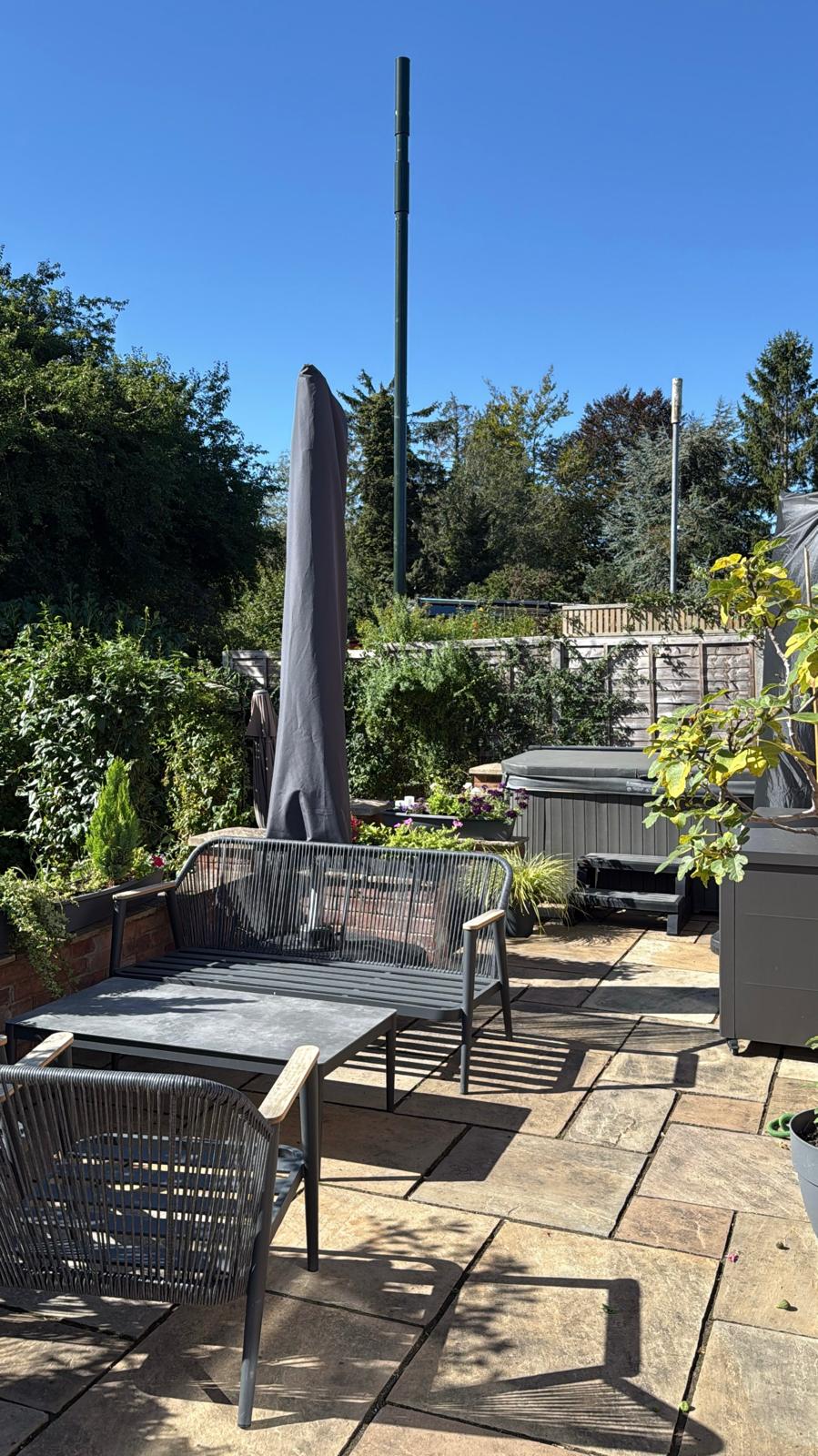
I am writing further regarding the 18m telecommunications mast at Hawthorn Close, which has now been erected, and the continuing concerns of residents regarding this development.
Although the mast is now in place, we understand that this does not necessarily bring the planning and enforcement issues to an end. There are documented cases elsewhere in the country where telecommunications equipment has subsequently been required to be removed following enforcement action.
We therefore believe it is important that the Council now establishes whether the development as actually constructed, rather than simply as shown on the operator’s submitted drawings, complies with every relevant limitation and condition necessary for it to constitute Permitted Development under Schedule 2, Part 16 of the GPDO.
1. EE’s due diligence and consideration of alternative sites
We would like to establish what due diligence and site-selection assessment EE undertook before deciding that Hawthorn Close remained the appropriate location for such a substantially larger replacement mast.
The Government’s Code of Practice for Wireless Network Development in England addresses site searches, consideration of potential options, the use of existing sites, masts and structures where appropriate, and the importance of minimising the visual impact of telecommunications infrastructure.
Could the Council therefore please establish:
- Whether EE undertook a documented site-selection or alternative-site assessment before proceeding at Hawthorn Close.
- What geographical area was included within that search.
- What alternative sites, existing telecommunications masts, buildings or other structures were considered.
- Whether mast/site sharing or a materially less intrusive solution was considered.
- Why potentially suitable alternatives were discounted.
- Whether the impact of an 18m structure amongst predominantly low-rise residential properties and bungalows was specifically considered.
- Whether the Council received, requested or examined this information before accepting EE’s position that the development could proceed as Permitted Development.
- If this information was not previously supplied, whether the Council will now obtain it from EE.
- Whether residents can be provided with the site-selection/alternative-sites assessment and any associated search-area maps or documentation.
We appreciate that EE describes this as a replacement installation rather than an entirely new telecommunications site. We are not suggesting that EE necessarily had to prove that no conceivable alternative existed. However, we believe it is entirely reasonable to establish what site-selection exercise was actually undertaken and what evidence exists that alternative and less intrusive solutions were properly considered.
2. Compliance of the mast actually erected with Permitted Development rights
We would also ask the Council to inspect and verify the development as actually constructed, rather than relying solely upon plans, measurements or assurances originally supplied by the operator. In particular, please confirm:
- The actual height of the completed mast.
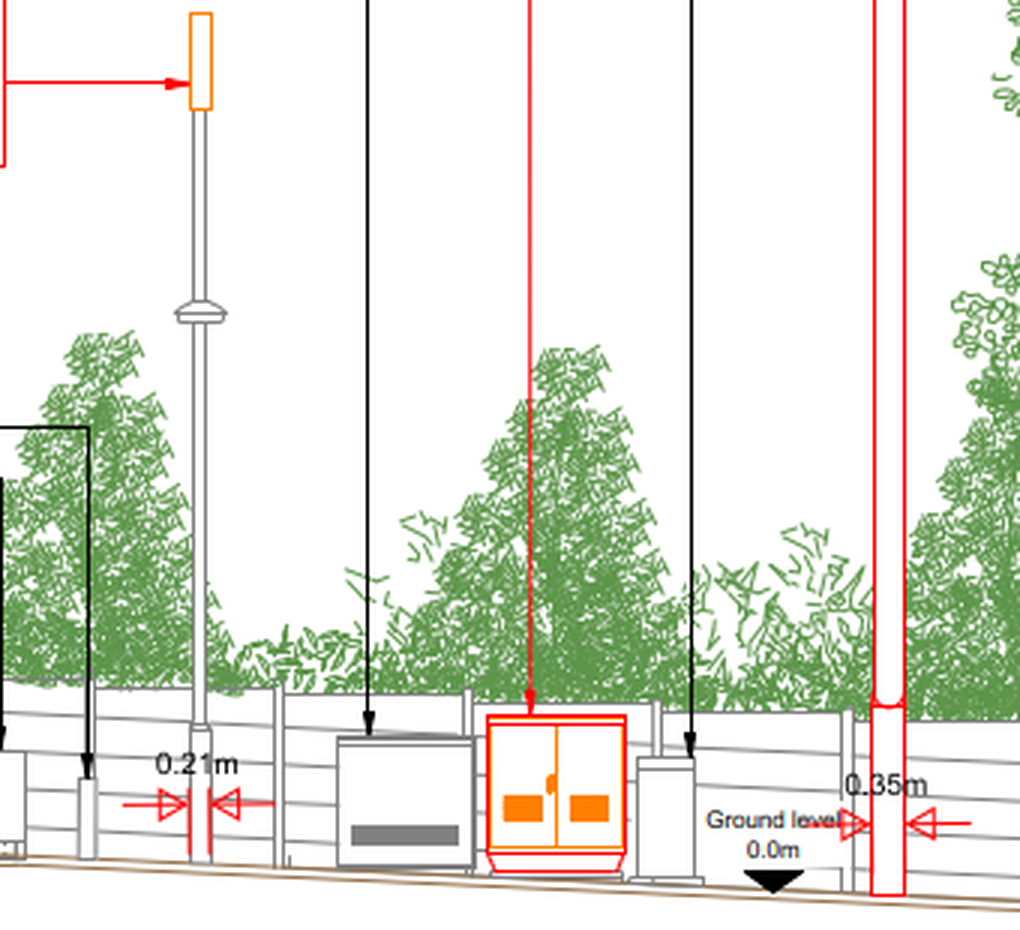
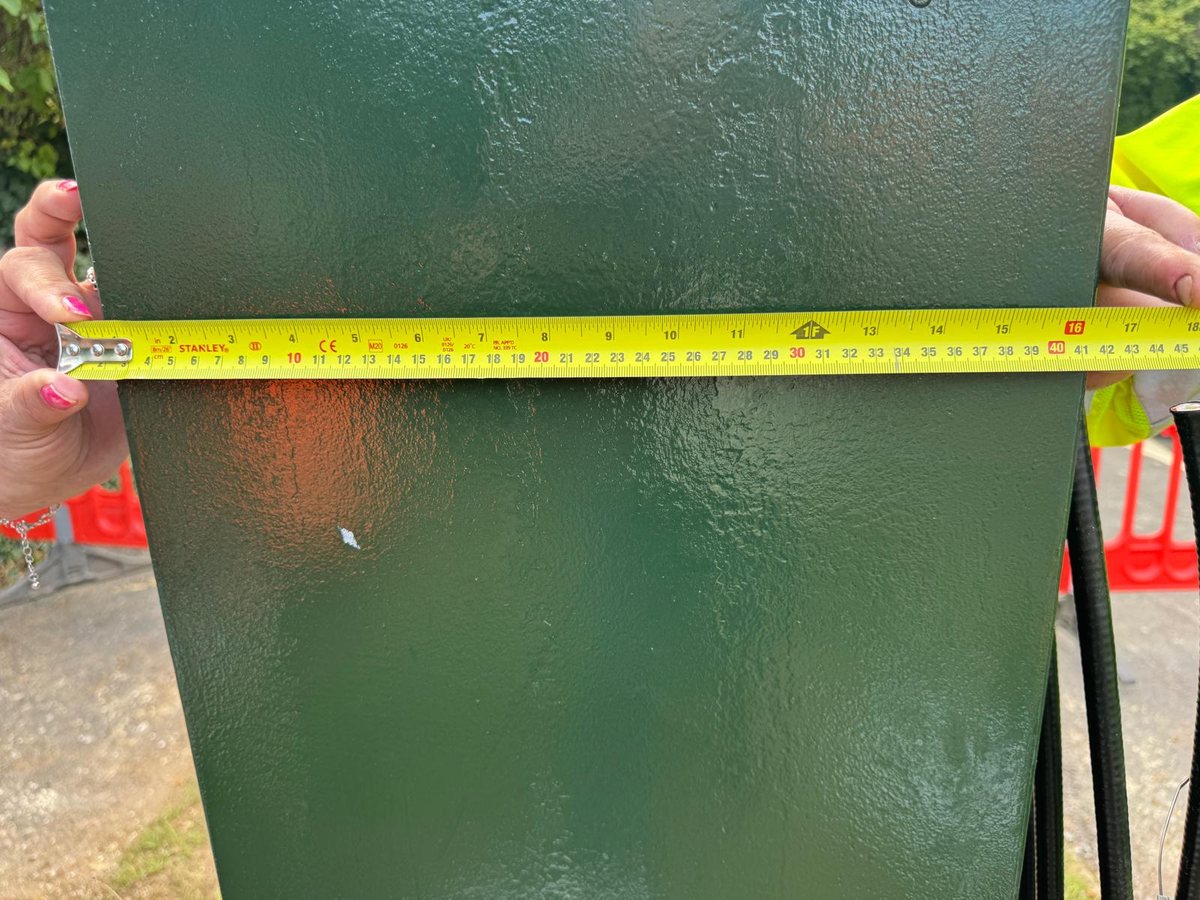
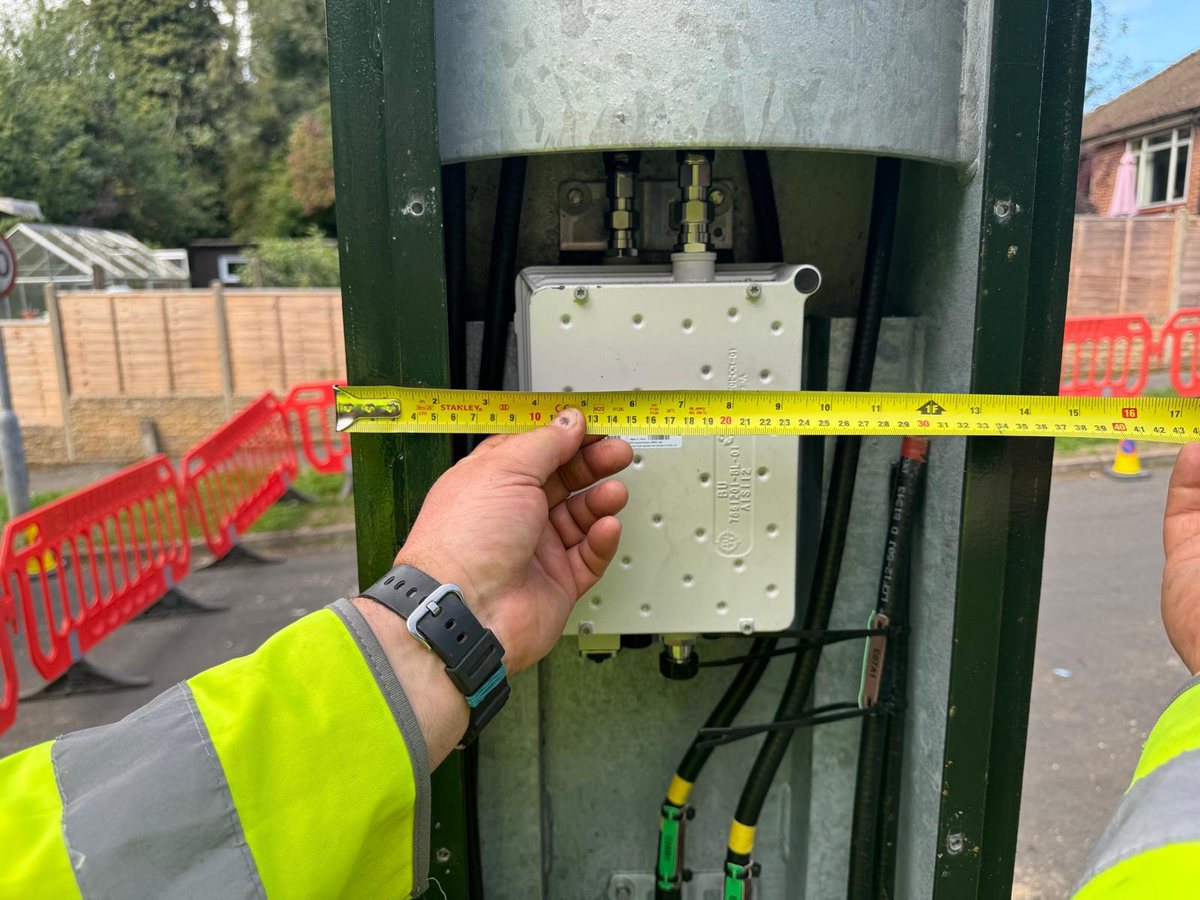
- The maximum width of the completed replacement mast and the corresponding maximum width of the mast it replaced.
- The precise increase in width.
- Whether that increase falls within the relevant Part 16 limitations.
- Whether antenna-supporting structures and other relevant components have been included correctly when determining those measurements.
- Whether the mast has been erected in a position satisfying the relevant provisions applicable to replacement masts.
- Whether all antennas, cabinets, supports and associated apparatus comply with the relevant limitations and conditions.
- Which precise provisions of Schedule 2, Part 16 of the GPDO the Council relies upon in concluding that the completed development constitutes Permitted Development.
This is particularly important because the operator previously stated that the replacement would be “not more than two-thirds wider” than the existing structure. From the drawings previously supplied, the dimensions appeared extremely close to the relevant limit rather than comfortably within it. We would therefore like the Council to establish the actual measurements of what has now been constructed on site.
3. The Council’s change of position
Residents remain concerned about the Council’s change of position during this matter. We were initially advised that prior approval was required and the matter subsequently involved Planning Enforcement. The Council later changed its interpretation and concluded that the proposal constituted Permitted Development and that prior approval was not required.
Given that the mast is now standing, we would be grateful for a clear written explanation identifying the precise statutory provisions upon which that revised conclusion was based. More importantly, we would like confirmation that the Council will assess the completed development itself against those provisions.
The question is no longer simply whether EE’s proposal appeared on paper to fall within Permitted Development rights. The question is whether the structure that has actually been erected at Hawthorn Close complies with those rights in every relevant respect.
4. Enforcement case 26/00147/1ENF
Could you please confirm whether enforcement case 26/00147/1ENF remains open and advise us of its current status? If it has been closed, we would be grateful for the date on which it was closed, the decision reached and the Council’s reasons and evidence supporting that decision. If it remains open, please confirm what matters are currently being investigated and whether an officer will inspect and, where necessary, measure the completed installation.
5. Removal of telecommunications masts after installation
We understand that the fact that a telecommunications mast has already been erected does not necessarily place it beyond subsequent planning enforcement if a breach of planning control is established.
Of particular interest is the Broadford Road/Dalkeith Grove, Bolton case (Appeal Ref: APP/N4205/C/24/3347005). In that case Bolton Council issued an enforcement notice concerning a telecommunications mast and associated equipment. Following a site visit in June 2025, the Planning Inspector dismissed the operator’s appeal, upheld the enforcement notice and refused planning permission. The enforcement requirements included removal of the mast and associated equipment and restoration of the land.
Of particular relevance to Hawthorn Close was the Inspector’s consideration of the mast within its residential surroundings, including its relationship with nearby bungalows. The Inspector considered the substantial height and width of the mast compared with surrounding street furniture and concluded that the development caused unacceptable harm to the character and appearance of the area and to residential outlook.
We fully appreciate that every planning and enforcement case turns upon its own facts and that the Bolton decision does not establish that the Hawthorn Close mast is unlawful. Nevertheless, it demonstrates an important point: the fact that telecommunications infrastructure has already been erected does not necessarily prevent subsequent enforcement action and removal.
That is particularly pertinent at Hawthorn Close, where an 18m telecommunications mast has now been erected amongst predominantly approximately 5m-high bungalows, following the refusal of the previous 20m mast proposal. There have also been other cases in which councils have pursued enforcement concerning telecommunications infrastructure and equipment has subsequently been removed or enforcement notices upheld.
We therefore ask the Council to confirm whether, if its investigation establishes that the Hawthorn Close mast as constructed falls outside the applicable Permitted Development rights, fails to satisfy an applicable limitation or condition, or otherwise constitutes a breach of planning control, enforcement action requiring alteration or removal remains available to the Council.
6. Visual impact and whether a less intrusive solution was reasonably practicable
We are also aware of the wider expectation that telecommunications operators should seek to minimise the impact of their apparatus upon visual amenity so far as reasonably practicable. This makes the question of EE’s site-selection process particularly important.
We would therefore like to know whether another technically viable location or configuration was considered which could have provided the required network coverage while having materially less impact upon the surrounding residential environment. If alternatives were considered and rejected, we would like to understand the technical or other reasons for those decisions.
7. Considerable and continuing community concern
We would also like to emphasise that these concerns are not those of one individual. Over the past two years, more than 250 signatures have been collected from residents opposing telecommunications mast proposals at this location, demonstrating the strength and sustained nature of local concern.
A residents’ group has been formed and a dedicated website has been established documenting the history of the matter, including relevant correspondence, photographs, planning information and developments at the site: https://hawthornclose.com. We would encourage the Council to view the website, as it provides a comprehensive record of residents’ concerns and the events leading up to the erection of the current 18m mast.
We fully appreciate that the number of signatures does not determine whether a development is lawful or benefits from Permitted Development rights. However, this considerable level of concern over two consecutive years demonstrates why residents believe the siting, scale and visual impact of telecommunications infrastructure at this particular location deserve proper scrutiny.
8. What residents are asking the Council to do
We are not simply asking the Council to reconsider the planning merits of a mast which has already been erected. We are asking for a properly evidenced investigation into:
- whether EE undertook appropriate site-selection due diligence and considered less intrusive alternatives;
- whether the mast actually erected corresponds with the drawings and dimensions upon which the Council based its decision;
- whether its dimensions fall within the relevant Part 16 Permitted Development limitations;
- whether every applicable condition and limitation has been satisfied;
- the precise statutory basis upon which the Council concluded that prior approval was not required;
- why the Council’s original position that prior approval was required subsequently changed;
- the current status and findings of enforcement case 26/00147/1ENF; and
- whether enforcement action, including alteration or removal, would be considered should the completed development be found not to benefit from the Permitted Development rights being relied upon.
Residents have spent a considerable amount of time trying to understand how such a substantial structure could ultimately be erected in this residential location without the normal prior-approval process, particularly following the refusal of the previous 20m mast proposal.
Now that the mast is standing, we believe residents are entitled to a clear and properly evidenced answer as to whether what has actually been constructed is lawful in precisely the form and location in which it now stands, and whether EE properly considered whether a less intrusive alternative location or solution was available.
Given the history of this matter, the Council’s earlier change of position and the considerable level of continuing community concern, I would be grateful for a substantive response addressing each of the points above, rather than a general confirmation that the development benefits from Permitted Development rights.
Kind regards